
AIENGINEERINGWORKFLOW
From specification to implementation
How our functional specification moved from a shared Google Document to a Markdown repository served through an MCP server.
Ideas, problems and lessons from building Exodus-Protocol.
How our functional specification moved from a shared Google Document to a Markdown repository served through an MCP server.

As we prepare to open Exodus-Protocol for beta testing, we're confronting an uncomfortable question: could the same AI tools that helped us build our game make it easier for someone else to copy its unique experience?

We use AI agents to play Exodus-Protocol, report potential bugs, and run thousands of battle simulations. The real lesson is not just that AI can generate software, but that it can also help test and balance it.

One-prompt game demos can impress without matching a specific vision. Building Exodus-Protocol has taught us to define and challenge the connections between mechanics before asking AI to implement them.

Resource transfers can enable cooperation, but they can also enable extortion. We are exploring whether threats, bluffing, reputation and alliances can turn that power imbalance into interesting gameplay without simply punishing weaker players.
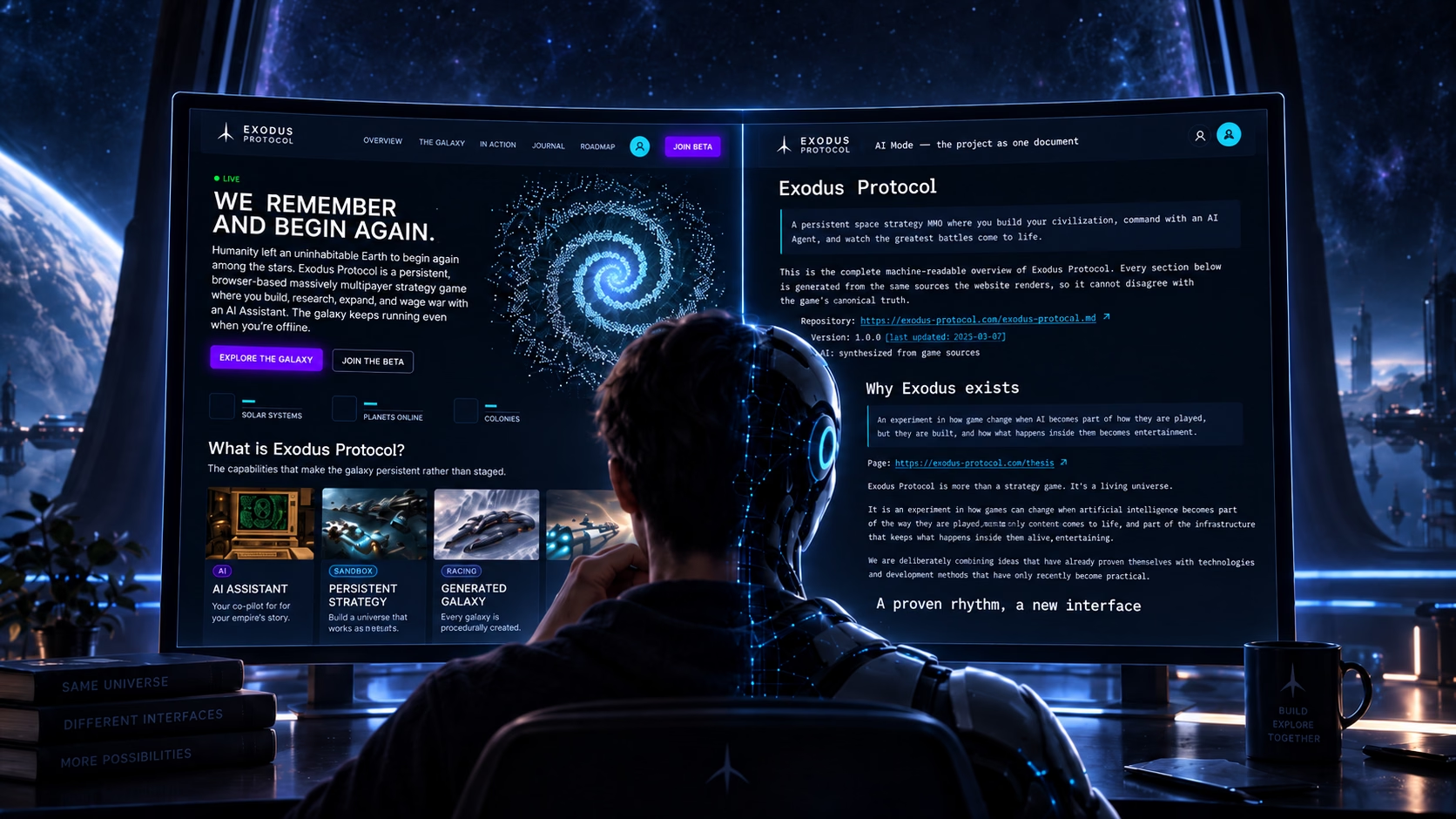
While redesigning the Exodus-Protocol website, we started asking a new question: should a website be designed only for people, or should AI be able to understand it just as easily?