Explore & Expand
Start with one planet and turn it into an interstellar civilization. Discover new systems, colonize valuable worlds, and build a network of colonies that gives you access to new resources, greater fleet range, and new strategic opportunities.
One planet is only the beginning
Every civilization in Exodus-Protocol begins on a single Starter Planet.
That world gives you the resources and infrastructure needed to begin rebuilding, but long-term progress requires you to look beyond it. Somewhere outside your starting system are planets that can provide resources your civilization needs, locations that extend the reach of your fleets, and positions that may become strategically important later in the game.
Exploration allows you to find opportunities. Colonization allows you to turn those opportunities into part of your civilization.
A galaxy that takes time to cross
Distance matters in Exodus-Protocol.
Fleets do not instantly move from one location to another. Every journey happens in real time and depends on the distance, route, and capabilities of the ships involved.
Depending on those conditions, another planet in your own solar system might be roughly an hour away, while reaching distant parts of the galaxy can require journeys lasting days.
That changes how you think about expansion.
Sending ships far from home means committing them to that journey. A distant colony takes longer to reach, reinforce, or defend. And a planet that looks attractive on the galaxy map may still be beyond the practical reach of your civilization today.
Space is not simply the map on which Exodus-Protocol takes place. Distance itself is part of the strategy.

Find the worlds that matter
Not every planet offers the same opportunity.
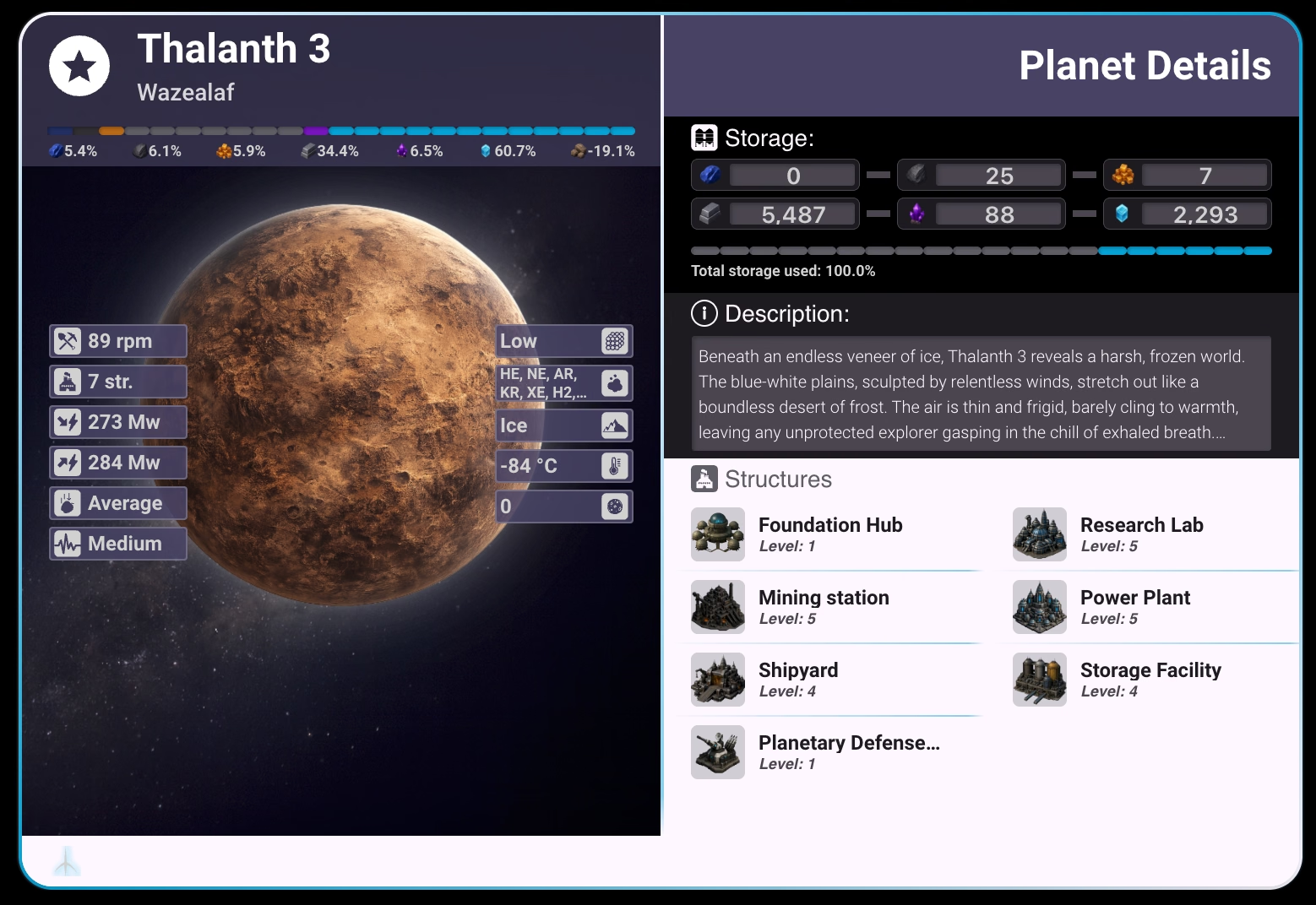
Starter Planets provide a balanced foundation, but the worlds beyond them can have very different resource profiles. One planet may be particularly interesting for Metal, while another could provide better access to Graphene, Cobalt, Hydrocarbon, Water, or Thorium Crystals.
Those differences matter because progress requires resources.
A technology you want to research, a new structure you want to construct, or a fleet you want to build may require materials that your existing planets cannot produce quickly enough.
Finding the right planet can therefore change the development of your entire civilization.
The most valuable planet is not always the largest or the closest. It is the one that gives your civilization what it needs next.
Before committing to a distant world, however, you may want to know considerably more about it. Discovering a location and understanding its real value are deliberately different challenges in Exodus-Protocol.
That is where scouting and intelligence become important.

Colonies extend your reach
When you discover an unclaimed planet worth keeping, you can send a Colonisation Unit to establish a new settlement.
That planet then becomes another part of your civilization, with its own resources, structures, and opportunities for development.
But colonies provide more than economic growth.
Ships have limited fuel capacity. The farther your fleets travel, the more important access to locations where they can refuel becomes.
A colony established far from your home world can therefore act as a stepping stone into another region of the galaxy. From there, fleets can refuel, continue their journey, and eventually establish another colony even farther away.
Alliance members can also become part of this logistical network when the required infrastructure and permissions are available.
Your empire gradually becomes a network of worlds that allows you to reach places that were impossible to reach when you started.
Technology changes what is possible
The limits of your civilization are not fixed.
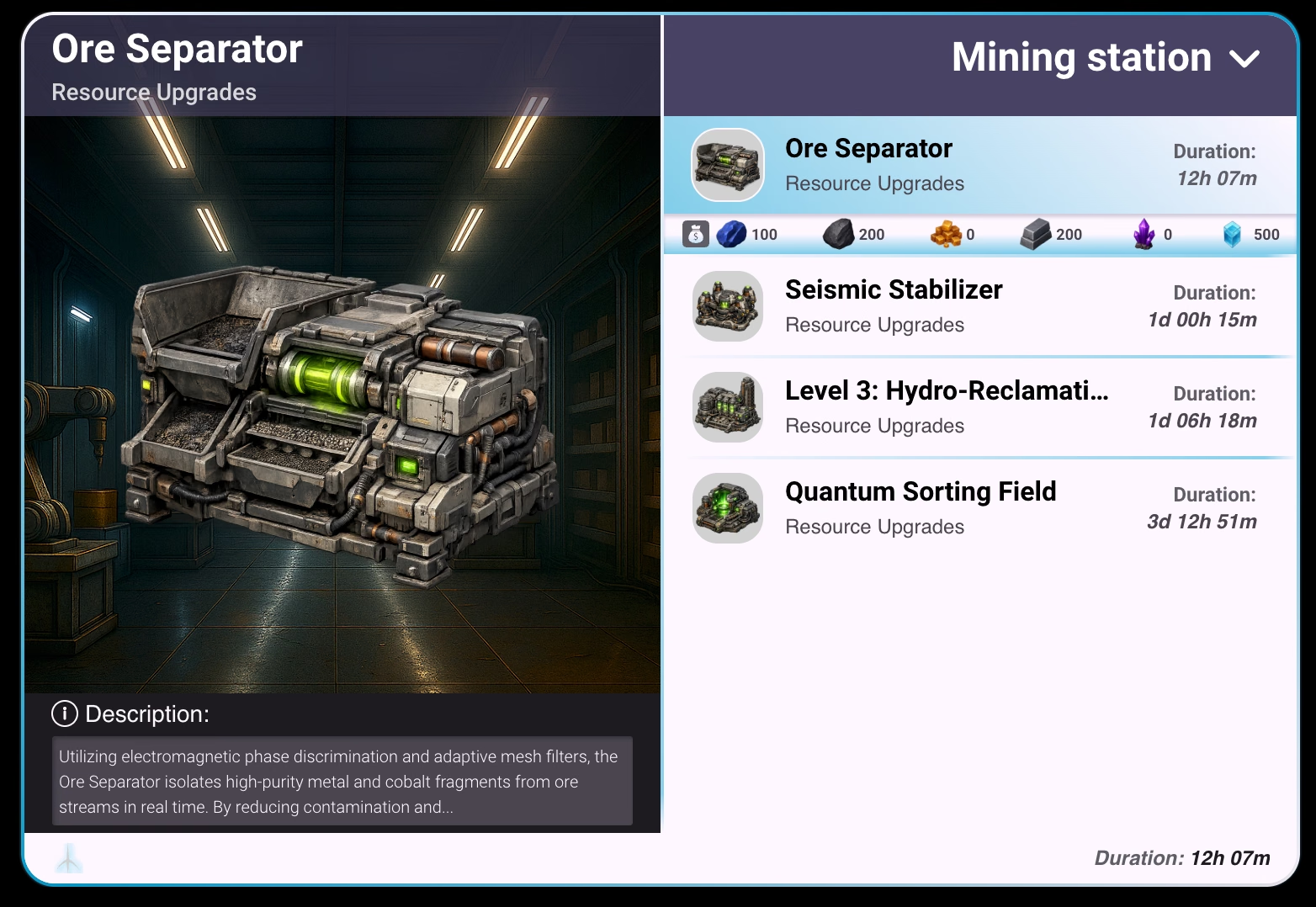
Research, modules, and new ships gradually improve what your fleets are capable of doing. Faster propulsion reduces the time required to cross large distances. Greater fuel capacity extends operational range. Some galactic lanes require capabilities that early fleets do not yet possess, but later unlock valuable alternative routes through the galaxy.
As your technology advances, the strategic geography of the universe changes with it.
A location that once seemed impossibly remote might become practical. A route that previously required several stops may become much more attractive. A distant colony may suddenly become the gateway to an entirely new region.
And some of the most significant technologies capable of changing how civilizations move through the galaxy are deliberately waiting much further down the technology tree.
Expansion is a strategic choice
Exploration and expansion have been at the heart of strategy games for decades because they create a simple but powerful question:
Where should I go next?
In Exodus-Protocol, that decision has long-term consequences.
Colonizing a planet commits resources and time. Its location affects your ability to support it. Its materials influence what it can contribute to your civilization. Its position may open access to new regions or place valuable infrastructure dangerously close to another player.
And because Exodus-Protocol is persistent, these decisions are not reset at the end of a short match.
The network of planets you establish over weeks and months gradually becomes your civilization.
You begin Exodus-Protocol with one planet. Where you go from there is one of the most important decisions you will make.